
Asino Registration and KYC: Sign-Up, Age and Verification
 Available in US
Contents
Asino registration in the available account information can start with email, Google, Telegram or WalletConnect. The available account information sets the account age threshold at 21+ and records a country-declaration approach at registration. KYC is triggered when suspicious activity is detected. That does not make Asino a “no KYC” casino, and it does not justify inventing a passport list, proof-of-address checklist or processing-time promise. Those exact KYC fields are not confirmed in the available information. The practical takeaway is simple: choose the sign-up route you can recover reliably, enter accurate account details, understand that verification can be triggered, and keep payment and withdrawal decisions separate from the basic account-opening process.
Four ways to start an Asino account
Asino offers four entry methods: email, Google, Telegram and WalletConnect. They solve the same first task, creating access to an account, but they create different recovery habits. Email is the most conventional route because it keeps the account tied to a mailbox you control. Google uses an existing identity sign-in flow. Telegram uses a messaging-platform route. WalletConnect uses a wallet connection rather than a traditional email-first path.
None of those methods should be treated as proof that the rest of the account lifecycle is identical. A convenient sign-in method does not remove age rules, country declarations, security checks or later verification. It also does not tell you which payment network to use. Registration is only the entry layer.
For readers deciding between phone, desktop and browser access before opening the account, the separate Asino mobile access guide explains the website, PWA, desktop-client and Telegram access formats. That distinction is useful because a registration method and an app format are different decisions.
What to prepare before registering
The safest preparation is operational rather than promotional. Use contact details you expect to retain, make sure the account information is accurate, and decide which sign-in route you can recover if a device is lost or a session expires. If you use Google or Telegram, the security of that external account becomes part of your Asino access chain. If you use WalletConnect, wallet security becomes relevant even before you reach the cashier.
The registration process also includes a written country declaration. That matters because country information is not a decorative profile field. It can interact with eligibility, product access and compliance checks. Entering an inaccurate country simply to pass an account form would create a mismatch that can become important later.
Do not treat registration as proof that every feature is authorised, available or suitable for your location. Account creation, payment access, product availability and local regulatory status are separate questions. The Asino licence and trust information explains the Australian regulatory context.
The stated age threshold is 21+
The available account information uses a 21+ minimum-age threshold for Asino. That is the stated account rule. Age is one of the basic eligibility checks that should be understood before registration rather than after money has been deposited.
An age threshold is not the same thing as identity verification. A site can have a stated minimum age and still use separate checks to verify identity or investigate account activity. Conversely, the absence of an immediate document request at sign-up does not remove the age requirement. The useful distinction is between the rule that determines who may hold an account and the process used to verify that an account satisfies the rule.
If your own legal or regulatory position is unclear, do not infer permission from a successful registration screen. Australian federal rules concern what providers may offer to people in Australia, while Asino’s own account conditions govern access to its product. Those are separate layers.
When KYC is triggered in the available account information
The stated KYC rule is narrow: verification is required when suspicious activity is detected. That makes the correct wording very different from saying that every user must complete KYC before the first deposit or every withdrawal. It is also different from saying verification can never happen.
A suspicious-activity trigger means the account can move from ordinary use into a verification process when a risk signal is identified. That trigger is associated with fraud checks and anti-money-laundering alerts. The exact internal criteria are not published, so no specific transaction, device change or account pattern can be said to trigger a check.
The practical implication is to keep your account details consistent and assume that a verification request, if triggered, needs to be dealt with before the account can continue normally. A user should not plan a time-sensitive cashout around an assumption that verification can never occur.
Known facts and intentionally unverified KYC details
| Question | Status | What that means |
|---|---|---|
| Registration methods | Confirmed | Email, Google, Telegram and WalletConnect are listed as sign-up options. |
| Minimum age | Confirmed | The stated threshold is 21+. |
| KYC trigger | Confirmed | KYC is triggered when suspicious activity is detected. |
| Exact KYC documents | Not confirmed | No exact document checklist is stated. |
| Exact KYC processing time | Not confirmed | No number of hours or days is promised. |
| Routine verification before every withdrawal | Not established | KYC is not stated to occur before every cashout. |
This boundary is deliberate. Confirmed Asino requirements should be kept separate from practices that are merely common elsewhere in the casino market. Passport copies, proof of address, selfies, source-of-funds checks and fixed review times are common concepts elsewhere, but common practice is not proof that a specific Asino account will follow the same sequence. Those details are therefore not stated as Asino requirements.
Why “no KYC” would be misleading
The phrase is too broad for the facts available here. The account terms include a KYC trigger, so verification exists. The fact that it is not described as a routine step for every account does not justify advertising the product as verification-free. That slogan would turn a conditional process into a categorical promise.
The more accurate interpretation is that registration and ordinary account use are described separately from triggered verification. If suspicious activity is detected, KYC can become relevant. If it is not triggered, no standard document-submission stage is confirmed. That is more precise than either extreme.
Registration and funding are separate decisions
Creating the account does not answer how to fund it. Asino’s payment setup is crypto-focused, with asset and network choices that require their own checks. Before sending funds, confirm that the asset and network you intend to use match the cashier option rather than assuming any wallet route will work.
The Asino deposits information covers the supported payment set and deposit minimums. A practical sequence is to establish secure account access first, then evaluate the cashier rail you intend to use.
What KYC can mean for a withdrawal
A withdrawal can become the point at which identity, account consistency or security questions matter, but there is no stated rule that every Asino withdrawal automatically triggers KYC. The stated KYC trigger is suspicious activity, not a universal first-cashout rule.
That distinction matters when planning liquidity. A withdrawal service being available does not guarantee that every request completes on a fixed timetable, especially if an account review is triggered. The dedicated Asino withdrawals page separates the verified cashout facts from limits, fees and timing fields that are not established as universal current values.
Support and account recovery
The available support information is available 24/7 and includes live chat. The Asino-branded support email confirmed for Asino is [email protected]. Those channels are relevant when an account cannot be accessed, a sign-in route changes, or a verification request needs clarification.
Use the support route to resolve an account-specific problem rather than guessing at required documents or creating a second account. Multiple accounts can complicate security and identity checks, and there is no confirmed basis for recommending duplicate-account workarounds.
For email support, describe the issue clearly but avoid sending sensitive documents unless the authenticated support process specifically requests them through an appropriate channel. The existence of a support address does not by itself prove that ordinary email is the correct destination for identity documents.
A practical sign-up sequence
- Choose the access route. Decide whether you want email, Google, Telegram or WalletConnect based on how you manage credentials and recovery.
- Use accurate personal and country information. The available account information includes a country declaration, so consistency matters from the start.
- Check the age threshold before proceeding. The account information uses the stated 21+ requirement.
- Secure the connected account. If Google, Telegram or a wallet is part of the login chain, protect that service as carefully as the casino account.
- Do not assume verification is impossible. KYC can be triggered by suspicious activity.
- Do not guess at documents or timing. Exact KYC paperwork and review duration are not stated because they are not confirmed.
- Move to the cashier only after the account is stable. Check the supported payment rail before sending funds.
This sequence is designed to reduce preventable account friction. It is more useful than a superficial click-by-click registration walkthrough because interfaces change, while the decision points remain consistent.
Common registration mistakes to avoid
- Using a third-party site that imitates an Asino sign-up page instead of starting from the verified brand route.
- Treating Google, Telegram or WalletConnect as proof that no later identity check can occur.
- Entering a country or age detail that does not match the real account holder.
- Depositing before checking which asset and network the cashier expects.
- Assuming a withdrawal delay automatically proves a payment failure when an account review could be involved.
- Sending sensitive identity files to an unverified contact channel.
Most of these mistakes come from collapsing several separate systems into one. Registration establishes the account. KYC is a conditional verification layer. Payments move value. Withdrawals return value. Local law governs a different question again. Keeping those layers distinct makes the account process easier to assess.
FAQ
How can I register at Asino?
The available account information lists email, Google, Telegram and WalletConnect as registration methods.
What is the minimum age in this Asino review?
The available account information uses a 21+ threshold.
Does Asino always require KYC before withdrawal?
No universal pre-withdrawal requirement is confirmed. The stated KYC trigger is suspicious activity.
Which documents will Asino ask for?
No exact document list is stated because that detail is not confirmed.
How long does Asino verification take?
No exact processing time is confirmed.
Where can I get account help?
The available support information is 24/7 with live chat, and the confirmed Asino support email is [email protected].
Bottom line on Asino registration and KYC
The account model described here is straightforward at the entry point: email, Google, Telegram and WalletConnect are the supported sign-up routes, the stated age threshold is 21+, and the user declares their country during registration. KYC is not described as a routine step for every account; it is triggered when suspicious activity is detected. The remaining uncertainty is clear: there is no confirmed exact document checklist or processing-time promise. Use accurate details, secure whichever sign-in method you choose, and treat verification as a process that can become relevant rather than as something guaranteed never to happen. For the broader brand assessment, return to the Asino review Australia.
This material was created by the Asino Australia Guide team.
Related posts
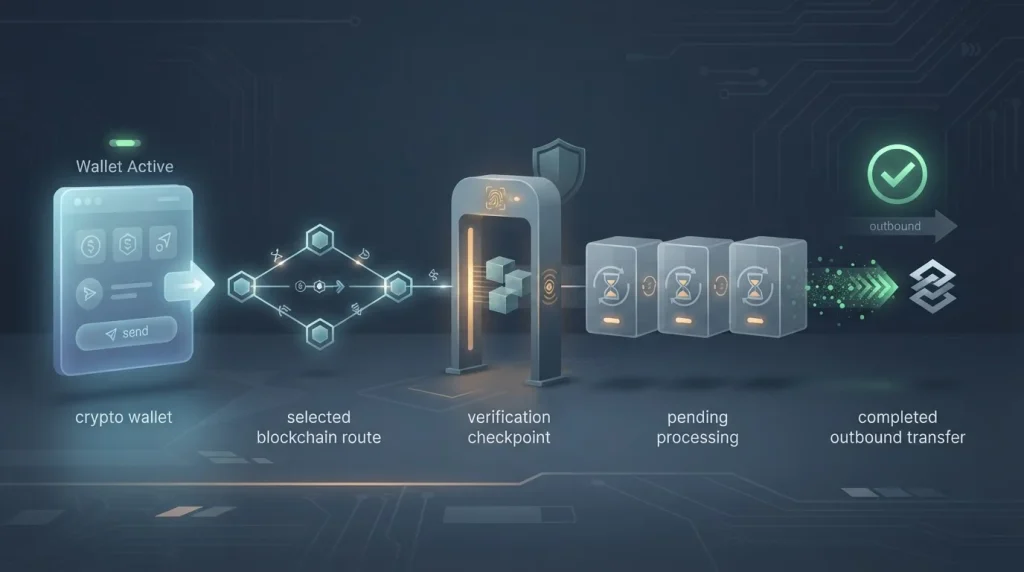
Asino Withdrawals: Minimums, Processing and Verification

Asino Crypto Casino Australia: Assets, Networks and Practical Banking